Manus AI Alternatives: 5 Agent Tools Worth Trying in 2026
Summary
Manus AI alternatives worth testing in 2026: Skywork, Genspark, Suna, Flowith, and Perplexity Comet. Manus popularized the idea of an agent that runs its own virtual computer and hands back a finished file instead of a chat reply, but its credit pricing is hard to predict and it is now owned by Meta. For founders naming and building a brand, the alternative that matters most is the one that turns a name into a deck, a landing page, or a logo direction fastest. Skywork wins that specific job. Suna wins if you want the code open and self-hosted. The rest trade price, speed, or scope for something else.
Among these Manus AI alternatives, Skywork is the strongest pick for founders who just named a company and now need a deck, a landing page draft, and brand images, not a research report. Genspark covers the widest range of tasks from one login. Suna is the one to pick if you want the code itself, not a subscription. Flowith is the cheapest way in. Perplexity Comet is a browser first and an agent second, worth knowing before you trust it with a task.
Why Look Beyond Manus AI?
Manus made a real case for itself in 2026: a virtual computer with its own browser, terminal, and file system, planning a task end to end and handing back a finished website, deck, or document instead of a wall of text. That is genuinely useful. It is also the reason people search for Manus AI alternatives: credit-based pricing that is invisible until checkout, a Meta acquisition that changes who is steering the roadmap, and a design built for one self-directed user rather than a small team passing work back and forth.
For NameGeneratorPlus readers specifically, the timing usually looks like this: you just ran a name through the generator, cleared a trademark check, and now you need the next three things fast, a pitch deck, a landing page draft, and a couple of logo directions to react to. That is a narrower job than "run an autonomous agent on anything," and it changes which alternative actually wins.
How We Compared These Agent Tools
We picked five tools that show up repeatedly in the same conversation as Manus: Skywork, Genspark, Suna, Flowith, and Perplexity Comet. Each one runs multi-step tasks with less hand-holding than a plain chatbot, and each one is different enough in scope that "best" depends heavily on what you are actually trying to ship this week.
The criteria table above covers pricing, what kind of output you get back, how autonomous each tool really is, whether the code is open, and the one watch-out we would want to know before subscribing. The methodology section below has the full detail on how we scored each one.
Skywork: The Pick for Founders Who Need Visual Deliverables Fast
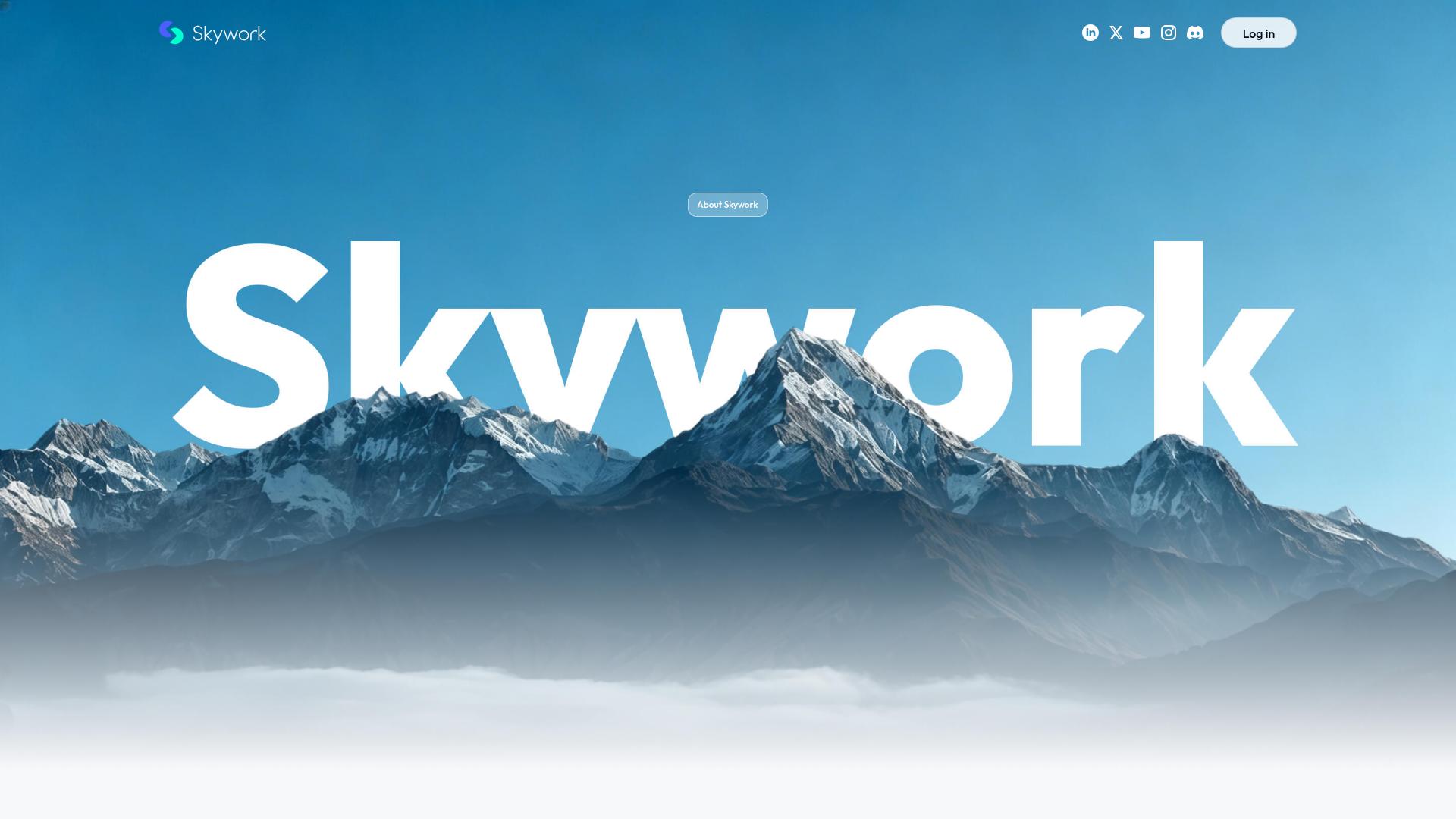
Skywork is built around seven specialized workspace agents rather than one general-purpose agent, covering documents, slides, spreadsheets, images, video, websites, and podcasts. The image agent runs on Nano Banana Pro, which produces noticeably cleaner output than most standalone image generators we tested against it. The Slides agent has a Deep Research mode that cites real sources instead of inventing statistics, which matters if that deck is going in front of an investor.
Two features stand out for this audience specifically. Layer Splitting turns an AI-generated image into editable layers, so a founder can adjust a logo mark without regenerating the whole image from scratch. Inspiration Capture watches a WhatsApp or Discord channel for screenshots and automatically pulls color palettes and typography into a library, useful when three co-founders keep sending each other brand references in a group chat.
The honest limits: it is a generalist tool, so the website builder is MVP-quality rather than a Webflow replacement, and Deep Research can be slow on a genuinely complex topic. For the specific job of turning a fresh company name into a deck and a landing page draft in one afternoon, it is the strongest option in this group.
Genspark: The Broadest Task Range in One Login
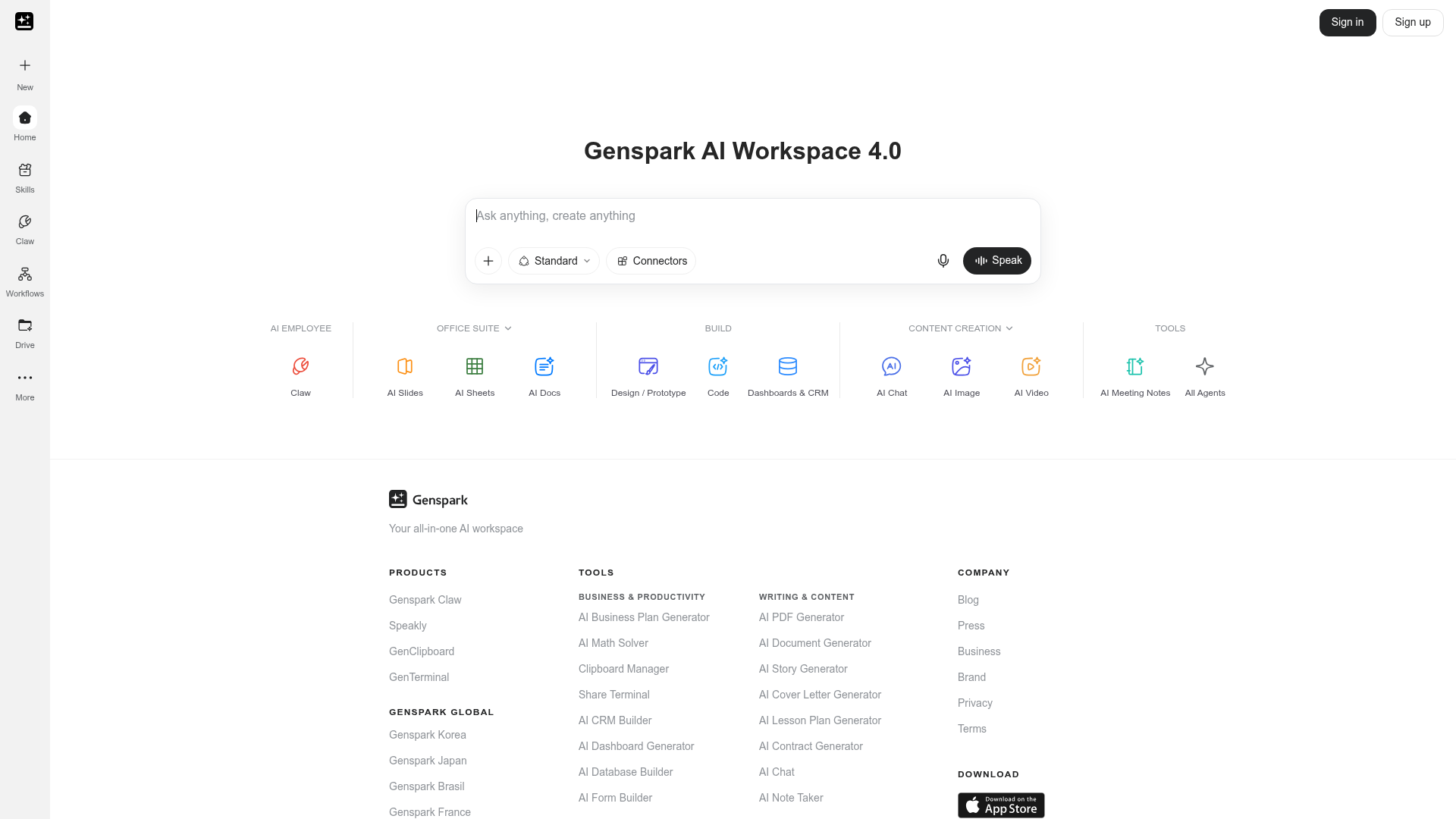
Genspark's pitch is a single no-code Super Agent that can browse the web, place a phone call, generate slides or video, and write and run code, all from one prompt. That breadth is the actual selling point: instead of five subscriptions for five tasks, a founder gets one login and a shared credit pool.
The tradeoff shows up in two places. Pricing tiers and per-task credit costs are not visible until you create an account, which is a small but real friction compared to a public pricing page. And spreading across that many task types means depth in any single one, slide design in particular, tends to trail a tool built to do only that.
Suna: The Open-Source Answer to Manus
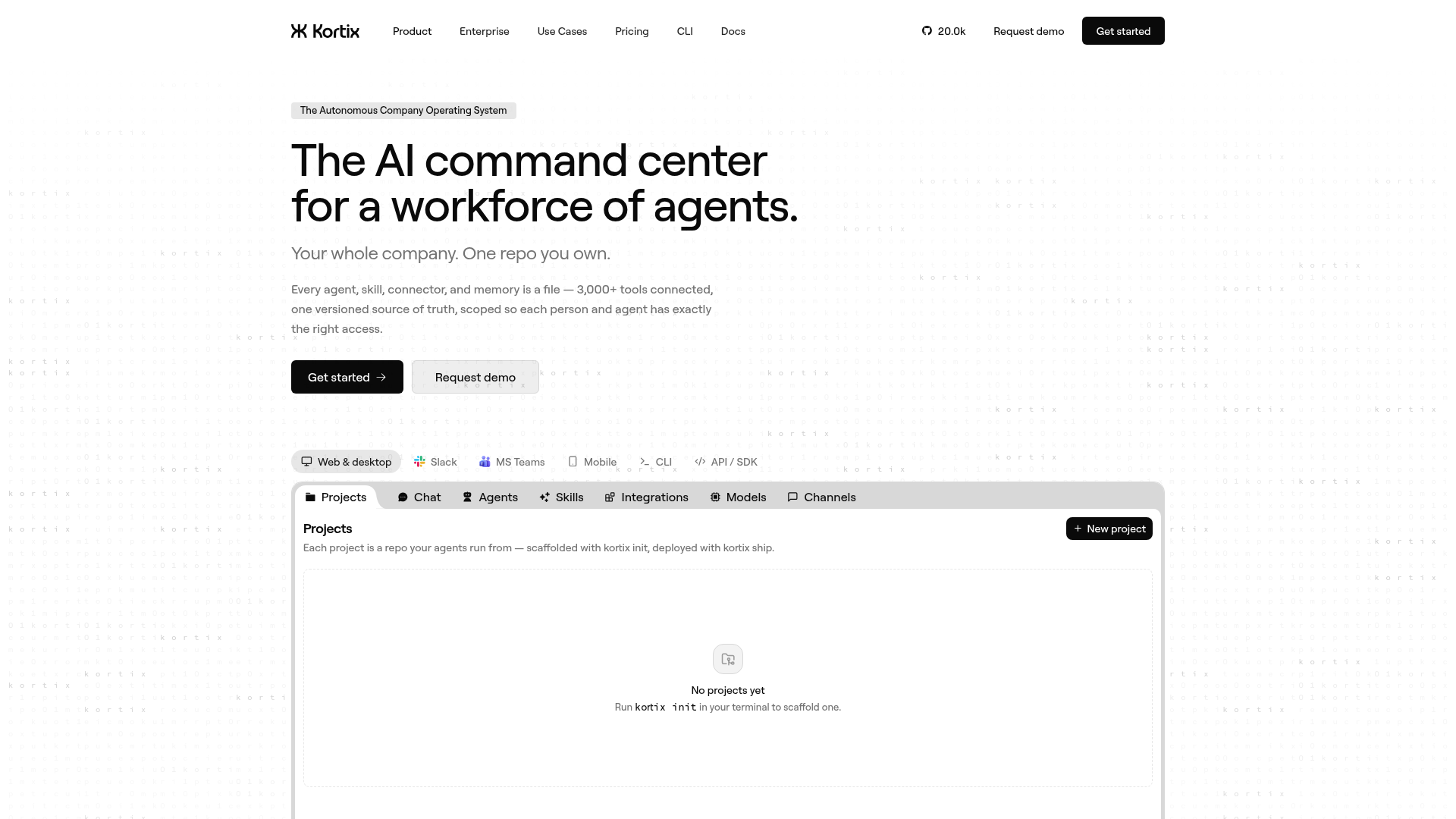
Suna, built by Kortix, is the closest open-source equivalent to Manus: a generalist agent running on real compute (browser, shell, files) that you can inspect, fork, and self-host rather than trust as a black box. The project has around 20,000 GitHub stars and ships updates frequently, which is a real signal of an active contributor base rather than an abandoned repo.
The core software is free. The real cost is your own infrastructure and whichever model you connect through your own API keys, so total spend scales with usage rather than a flat subscription tier. That also means you personally own uptime, security patching, and support, since there is no vendor SLA behind community-driven GitHub issues. For a technical co-founder who wants full control over where naming research and brand data actually live, that tradeoff is worth making.
Flowith: Cheapest Entry Point With a Visual Canvas
Flowith runs two agents, Oracle and Neo, on an infinite branching canvas instead of a linear chat thread, so parallel research threads and slide-deck drafts stay visually separated rather than scrolling past each other. Pro starts at $19.90 a month, the cheapest paid entry point among the autonomous-agent tools in this comparison, and it bundles access to more than 40 underlying models.
The catch is thin third-party validation: G2 lists only two reviews for Flowith at time of writing, which is not enough of a sample to lean on the way we can for Manus or Genspark. Some reviewers also mention losing track of where they were in longer canvas sessions. Reasonable if budget is the deciding factor, worth revisiting once more independent reviews exist.
Perplexity Comet: An AI Browser First, an Agent Second
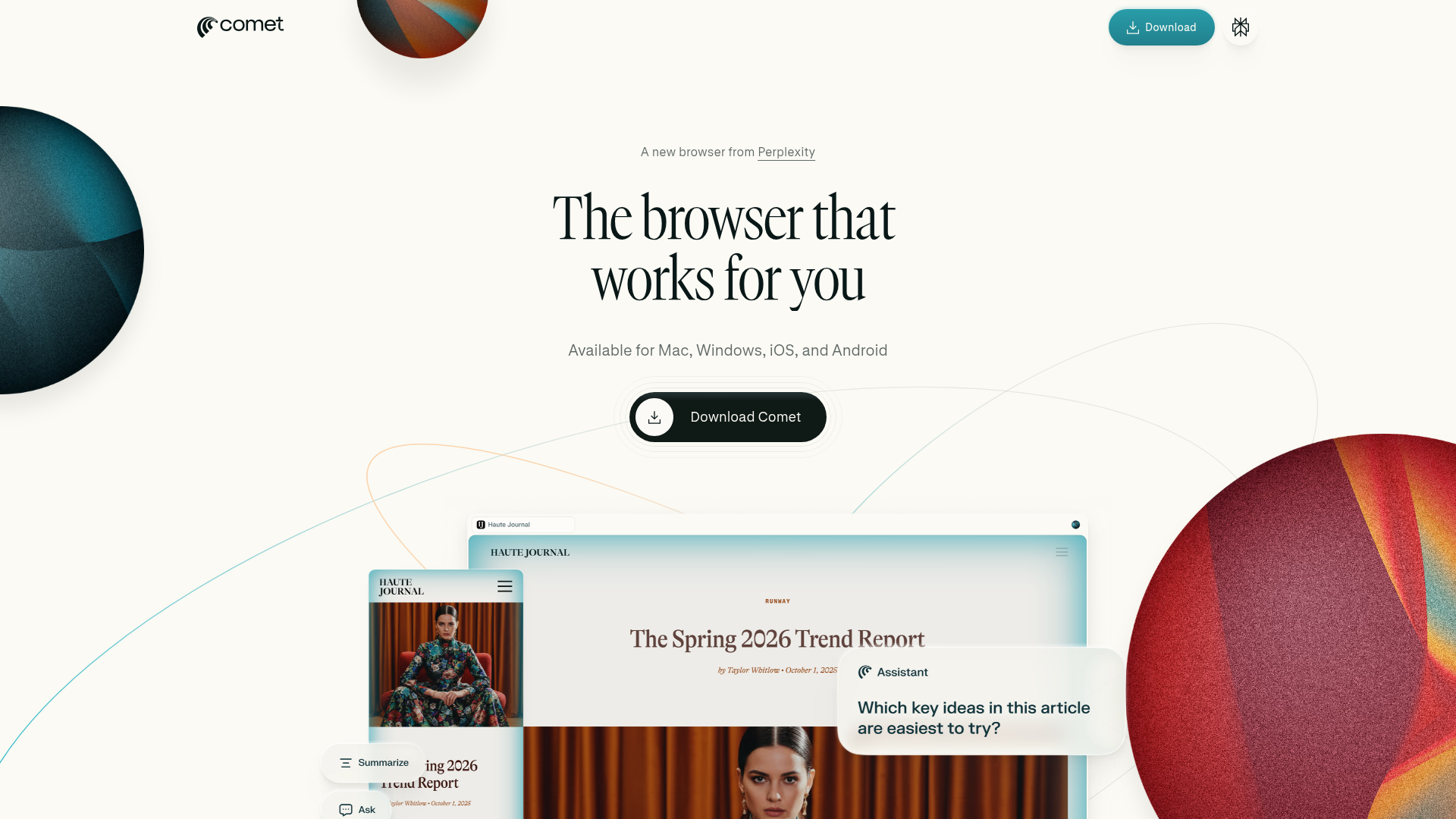
Comet is Perplexity's own Chromium-based browser, and its strongest feature is the page-aware assistant that reads and summarizes whatever tab is open, inheriting the citation quality Perplexity built its search reputation on. A separate, credit-based Comet Agent handles multi-step web tasks, including Background Assistants that keep working after you close the tab, and the free tier is more generous here than almost anywhere else on this list.
Worth knowing before you hand it a task: security researchers publicly disclosed a prompt-injection vulnerability nicknamed CometJacking in 2025, and agentic task reliability outside straightforward search-and-summarize work is inconsistent based on public reporting. If your ChatGPT Plus subscription already covers occasional autonomous browsing through Agent mode, that may cover the same need without adding Comet as a second tool.
Which One Should You Actually Pick?
Match the tool to the job, not the other way around. If the next thing you need is a deck, a landing page draft, or a set of brand images to react to, Skywork gets there fastest, and it is the only tool here purpose-built for that exact handoff from a name to a visual identity. If you would rather own the code and the compute, Suna is the honest open-source route, with the operational cost of running it yourself attached.
Genspark earns its spot when the task list is genuinely varied and one login beats five. Flowith and Perplexity Comet are narrower, cheaper, or already-installed bets rather than full Manus replacements. None of these five copy what Manus does at the widest, most open-ended research scale, and that is fine: most founders naming and launching something this month do not need that scale, they need the next concrete deliverable on their desk by Friday.
At-a-glance
| Skywork | Genspark | Suna | Flowith | Perplexity Comet | |
|---|---|---|---|---|---|
| Pricing model | Free tier, Pro roughly $12-16/month | Free tier, paid from about $19.99/month up to around $200/month | Free and self-hosted, bring your own model API keys; hosted plan extra | Free Starter, Pro $19.90/month, up to $499.90/month for Infinite | Free tier, Pro $20/month, Max $200/month |
| What you actually get back | Docs, slides, sheets, images, video, podcasts, and simple websites | Slides, docs, images, video, code, plus voice calls from one prompt | Whatever you script: code, research output, or file tasks, self-hosted | Branching canvas output: research, slide decks, and simple sites | Page summaries and research answers; task execution is secondary |
| How it operates | 7 specialized workspace agents rather than one freeform agent | Single no-code Super Agent handling most task types | Open-source generalist agent you configure and host yourself | Two agents (Oracle and Neo) running on a branching visual canvas | Browser-embedded assistant plus a separate credit-based agent mode |
| Open source or self-hostable | No | No | Yes, around 20k GitHub stars, fully self-hostable | No | No |
| Biggest watch-out | Generalist positioning means it trails specialists on any single task | Real pricing grid is hidden behind an account signup | You own uptime, security patching, and model costs yourself | Only 2 reviews on G2 at time of writing, too thin to trust fully | A 2025 prompt-injection flaw nicknamed CometJacking was publicly disclosed |
Skywork
- Nano Banana Pro image quality beats most standalone image generators we have seen
- Deep Research slides mode cites real academic and web sources, not invented stats
- Layer Splitting gives Photoshop-style layer editing on AI-generated images
- One subscription replaces separate slide, image, and document tools for a small team
- Generalist positioning means no single agent here is best-in-class versus a dedicated specialist tool
- Website generation is MVP-quality, not a real replacement for Webflow or Framer
- Deep Research mode can be genuinely slow once a topic gets complex
The one to open right after you pick a name: it turns that name into a deck and a landing page the same afternoon.
Genspark
- Broadest task range of the group: slides, sheets, docs, image, video, code, and voice calls
- No-code Super Agent handles multi-step tasks with less manual setup than a builder tool
- Office-suite plugins for Google Workspace, PowerPoint, Excel, and Word cut export friction
- Pricing tiers and credit costs stay hidden until you create an account and log in
- That broad feature surface means depth in any one tool, like slides, can trail a specialist
- Heavier usage tiers climb toward $200/month faster than most competitors here
Good for a founder juggling several small tasks a week who does not want five separate logins.
Suna
- Full source access lets you inspect, fork, and modify the agent instead of trusting a black box
- No mandatory subscription, self-hosted cost scales with your own infrastructure and model choice
- Active project with roughly 20k GitHub stars and frequent releases from a real contributor base
- Self-hosting means you personally own uptime, security patching, and model API costs
- Setup and prompt-engineering effort runs noticeably higher than a polished hosted product
- Support is community-driven through GitHub issues, not a vendor SLA you can escalate to
The right call only if someone on the team is willing to run and patch the stack themselves.

Flowith
- Cheapest paid entry point among the autonomous-agent tools in this comparison
- Access to more than 40 underlying models bundled inside a single subscription
- The branching canvas keeps parallel task threads visually separated instead of one long thread
- G2 lists only 2 reviews at time of writing, too small a sample to treat as reliable signal
- Some reviewers report the canvas interface loses your place across longer sessions
- A small user base means fewer independent write-ups exist to cross-check vendor claims against
Solid if the budget is the deciding factor and you like seeing tasks branch out visually.
Perplexity Comet
- Strong source citation and summarization inherited directly from Perplexity search
- Generous free tier compared to most of the other agent tools in this list
- Background Assistants genuinely keep working on a task after you close the tab
- A prompt-injection flaw nicknamed CometJacking was publicly disclosed by security researchers in 2025
- Agentic task reliability is inconsistent outside straightforward search-and-summarize use cases
- No public G2, Capterra, or Trustpilot aggregate rating exists for Comet specifically yet
Install it for the browsing and research, treat the autonomous agent side as a bonus, not the reason to switch.
Verdict
If you named your company this month and need the next deliverable, not another research report, start with Skywork: it is the fastest path from a chosen name to a deck and a landing page draft. Reach for Suna instead if someone on your team wants the code itself and is comfortable running it. Genspark earns its place when the job list is varied and you want one login for all of it. Flowith and Perplexity Comet are honest, narrower bets: cheap autonomy, or browsing with agent features layered on top. None of these fully replace Manus for open-ended research at scale, they replace it for the specific job most founders actually have this week.
How we tested
We read the pricing page, the docs, and the public changelog for each tool between late June and mid-July 2026, then cross-checked claims against G2, Capterra, and Product Hunt threads where an aggregate rating existed. Where a vendor's own pricing page hid figures behind a signup wall (Genspark), we noted that as a watch-out rather than guessing a number. For the agent-specific risk items (Flowith's thin G2 sample, the 2025 CometJacking disclosure against Perplexity Comet), we cite the public source rather than the vendor's framing. Scores below are on a 0-5 scale weighing three things equally: fit for a founder's naming-to-launch workflow (deck, landing page, brand assets), pricing transparency, and how well-documented the tool's limits are in independent reviews rather than marketing copy.