Housewarming Gift Ideas That Start With the House's Name
Summary
The best housewarming gift ideas carry something specific to the people moving in: the name of the house, the family or the street. This guide covers house signs, two-surname dilemmas, food that gets used up and handmade options, plus a realistic budget of roughly $20 to $50. Run every idea through three quick tests (stranger, shelf, year two) and the generic candle drops out on its own.
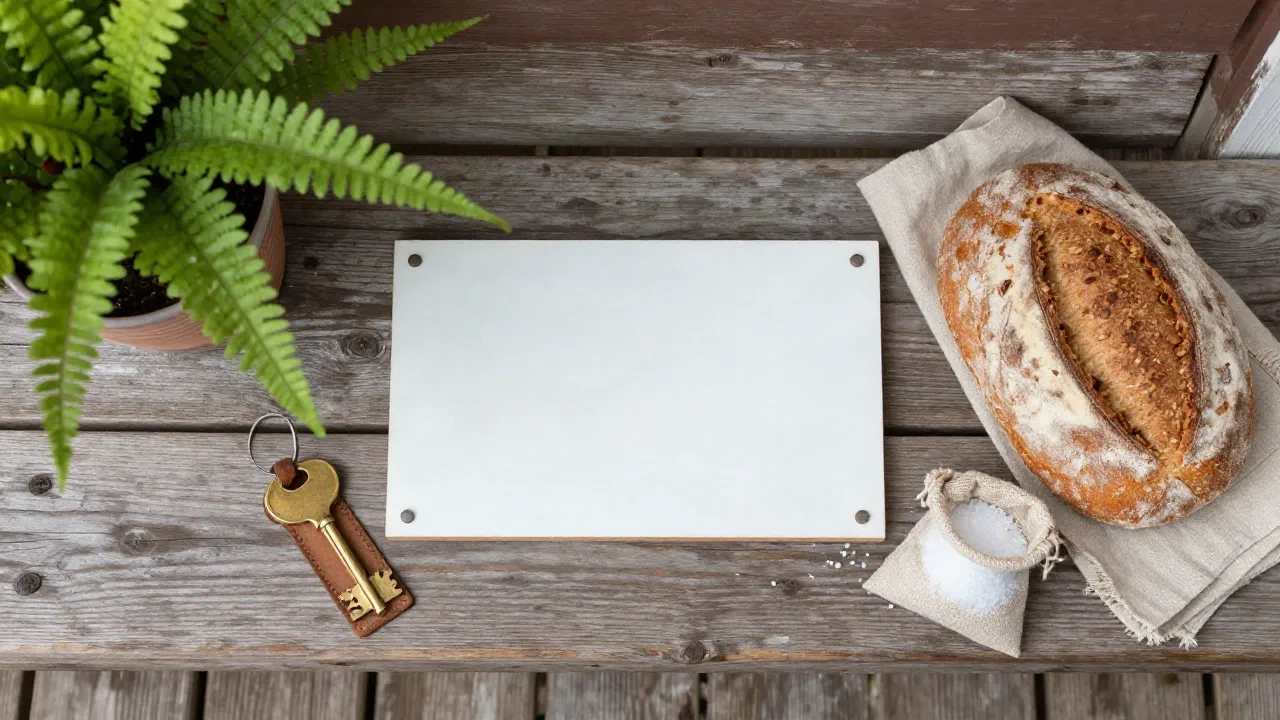
Most housewarming gift ideas fail the same way: they are interchangeable. A scented candle fits any home, which is exactly why it says nothing about this one. The gifts people keep share one trait. They carry a name, a place or a joke that belongs to the people moving in.
That is the angle of this guide. We spend our days on names, so we start there: the name of the house, the name on the door, the name of the street. Then we cover the gifts that need no name at all.
Why does the standard housewarming gift end up in a cupboard?
Because it was chosen for the category, not the person. Search for housewarming gift ideas and the same five items come back: candle, plant, diffuser, cheese board, gift card. None is a bad object. All of them are anonymous.
A useful test is to ask whether the gift could be handed to a stranger without changing a word. If yes, it will sit in a drawer next to the other gifts that passed that test. If it only makes sense for these two people in this flat, it gets a shelf.
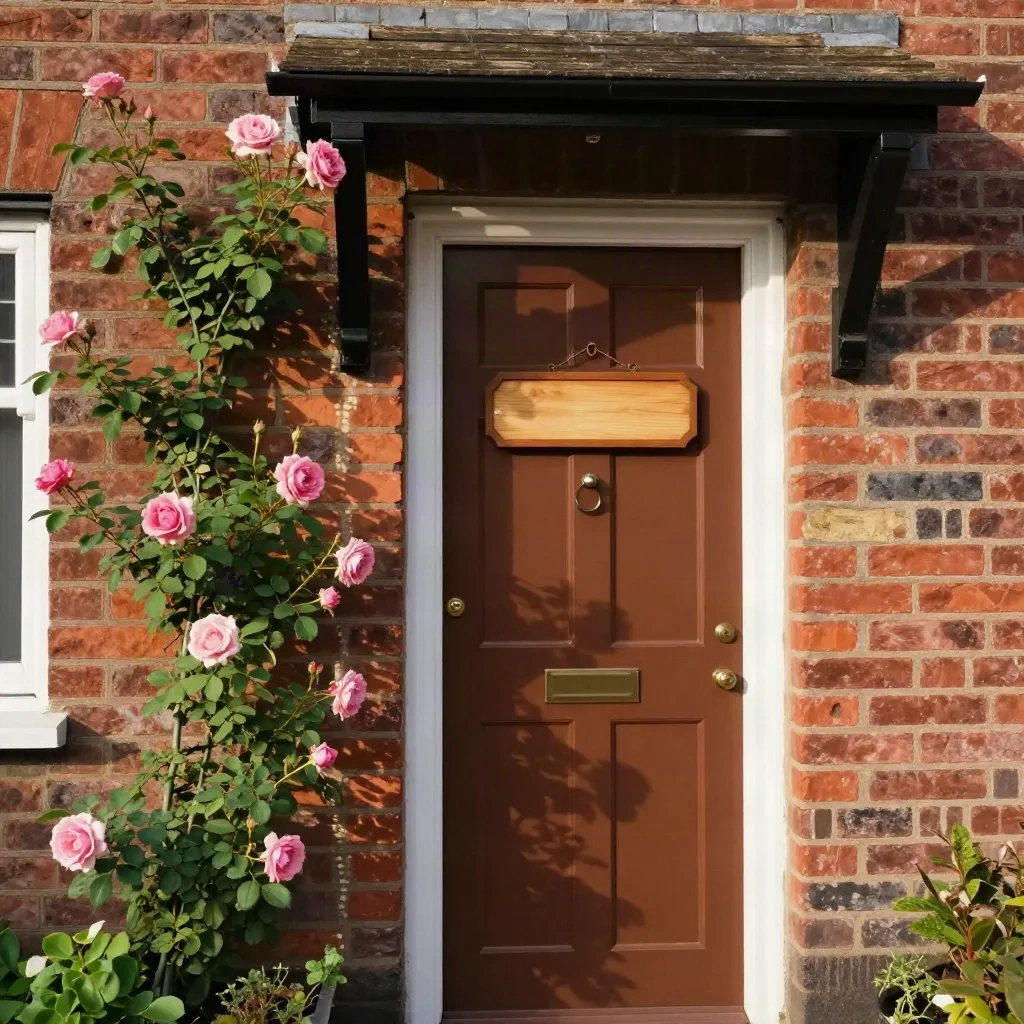
Skip the generic scented candle unless you know their nose. Worth the effort instead: one object that answers the question "what do these people call this place?"
Should you give a house a name?
In Britain, plenty of people already have. For much of British history, homes were identified by a name or a loose description rather than a number, and the habit never fully died. Admiral, the insurer, analysed address data across England, Wales and Scotland and found that The Cottage was the most common house name, followed by Rose Cottage, The Bungalow, The Coach House, School House, The Lodge and The Barn.
Notice what those names are. Almost none is poetic. They describe what the building was or what it looks like. The origin explains the resistance: a name that records a fact (the old school, the coach house) survives for centuries, while a name chosen to sound pretty rarely does.
That gives you a method. Do not invent a grand name for your friends' two-bedroom flat. Find the fact. Was it a bakery? Is there an enormous walnut tree out back? Did they sign the lease on a rainy Thursday and talk about nothing else for a week?
A name generator can throw options at you here, and ours is happy to help, but the filter is the same as ever. Pick the one that is true to the place and short enough to say without apologising. One or two syllables in the main word, three at most.
Which gifts can carry a name without looking like a mug?
This is where most name gifts go wrong. Put a family name on a mug and you have a promotional item. Put the right name on the right object and you have a keepsake. Three formats hold up well.
A house sign. Slate, wood or enamel, with the house name or the family name. It lives outdoors and gets seen daily.
A custom doormat or a house-number plaque. Cheaper, more casual, a good fit for a first flat.
A framed map print. Their street or their old neighbourhood, with the date they moved. No lettering gymnastics needed.
For personalised pieces, three shops are worth knowing, each with a clear trade-off. Etsy has built-in personalisation and thousands of independent sellers, but quality varies by seller and shipping can be slow, so order at least three weeks ahead.
UncommonGoods sells curated gifts with careful packaging and is B-Corp certified. The catch is a higher average price and faster shipping inside the US only.
Zazzle is the print-on-demand route, with a large catalogue of name and monogram templates from independent designers. Design quality is uneven, so look at three or four sellers before you pick, and keep your name short, since long ones get cramped on small items.
The rule on spelling is simple. Check it twice, then ask someone else to check it. A misspelled surname on an engraved sign cannot be returned in any useful way.
What if a name feels like too much?
Then give a gift that does the work of a name without printing one. A hand-wrapped parcel with something from their old street. A cutting from your own garden, potted. A recipe card in your handwriting for the dish you always cook when they visit.
These cost almost nothing and they beat most shop-bought items, because they carry the one thing a retailer cannot sell you: a specific shared history.

Handmade does not mean amateur. It means you spent attention, and that is the real signal a housewarming gift sends. Attention is also the reason the old bread, salt and wine tradition survives: each is small, each gets used up, and each means something (food, flavour, welcome).
Is food still a safe housewarming gift?
Yes, with conditions. Consumables are the lowest-risk category because nobody has to find space for them. Nothing gets stuck on a shelf for years out of politeness.
The conditions are about the person, not the product. Check for allergies and dietary rules before you buy a hamper. Be careful with alcohol unless you know the hosts well, since some etiquette advice, including from Emily Post's circle, suggests leaving it out. And avoid anything perishable if they are mid-move and the fridge is not plugged in yet.
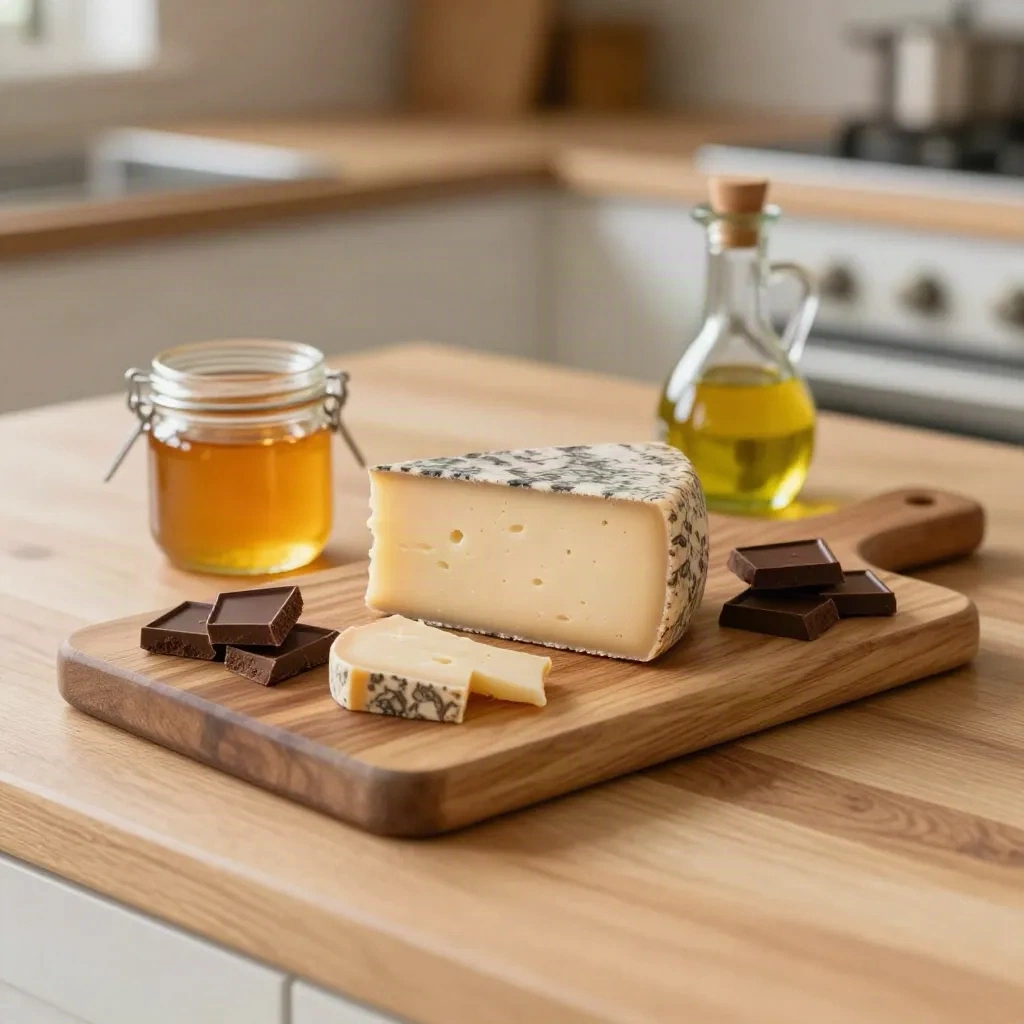
If you are in the US and want something regional, Goldbelly ships famous restaurant dishes nationwide, with items from around $40. Shipping costs run high and it does not deliver outside the US, so it suits a sentimental pick (their hometown pizza, say) better than a last-minute buy.
For a smaller budget, a jar of local honey and a loaf from the bakery two streets away works. It is a gift with a postcode.
What do you put on the sign when the household has two surnames?
This question trips up more gift-givers than any other. Two people move in together, one surname each, and a "The Smiths" sign becomes a small diplomatic incident. Do not guess. Ask one of them privately, or choose a format that avoids the problem.
There are three safe routes. Use both surnames with an ampersand, which works in most scripts and fonts. Use the street or the house name instead of a family name. Or use first names only, which suits a flat and reads as warm rather than formal. Same-sex couples, blended families and households with a hyphenated child's name face the same fork, and the same fix applies.
Spelling and diacritics deserve a check as well. A sign that drops the accent on a Spanish or Swedish surname gets noticed every single day it hangs by the door. Send the exact spelling to the seller in writing and ask for a proof before production starts.
How much should you spend?
Less than you think. Most etiquette guides land on roughly $20 to $50 for friends and colleagues, with more for close family. Sources disagree on the exact figure, so treat it as a rule of thumb, not a law.
Spend goes further when it is attached to a reason. A $25 sign with the right name beats a $90 object chosen at random. If several friends want to pool money, a single larger piece (a proper hand-lettered house sign, a good cutting board with the street engraved) usually beats five small ones.
One practical note: include a gift receipt for anything with a size or a style. Duplicates are the most common housewarming problem, and the exception is a personalised item, which cannot be exchanged. For those, ask a mutual friend first.
Three ways to test a gift before you buy it
Here is the short version of how we vet any naming idea, adapted for gifts.
The stranger test. Could this go to anyone? If yes, keep looking.
The shelf test. Where exactly does it live in their home? If you cannot answer, they cannot either.
The year-two test. Will they still be glad to see it in twelve months? Consumables pass by being gone. Keepsakes pass by being right.
Run a gift through those three and most of the weak ideas drop out on their own.
What would we actually buy?
For a close friend in a first home: a small house sign with the street name or the one fact about the place that made them laugh, plus a loaf of bread. For a colleague: honey, good chocolate and a handwritten note, under $30. For family moving into a house with history: a framed print of the street and the date.
If you are still stuck, write down what the hosts call their place when they talk about it. The name is usually already there. Try it on a gift this week and see whether they say "how did you know?" at the door.