White Elephant Gift Ideas People Actually Fight Over
Summary
White elephant gift ideas work best when they hit the steal threshold: two or more people in the room would trade what they're holding for yours. The sweet spot is $25-35, specific enough to feel chosen, universal enough for mixed company. This guide covers the mechanics of why certain gifts get taken, 10 reliable under-$30 picks, the overlooked case for digital subscriptions, and the three gift categories that consistently underperform at every exchange.
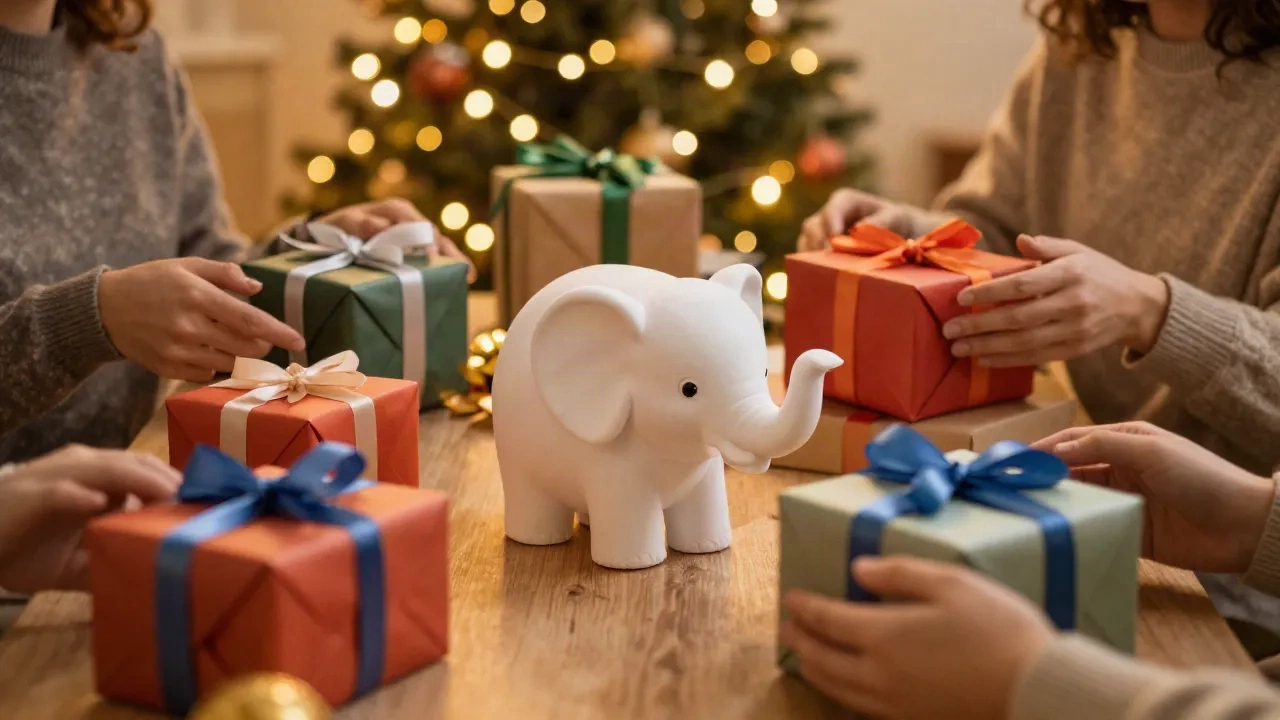
The name comes from a Siamese royal custom of gifting albino elephants, expensive to feed, politically impossible to refuse. Your office version is lower stakes, but the logic holds: the best white elephant gift ideas create a moment of actual want. Two people at the table doing the math, deciding if it's worth the social move to take yours. Here's what lands, what gets stolen three times, and what quietly ends up in someone's car trunk on the way home.
The etymology gives it away: this is about obligation, not generosity
"White elephant" entered English via Pali and Sanskrit (hatthi + seta, roughly "bright elephant"). The albino elephant was sacred in several Southeast Asian traditions; the ruler who received one couldn't refuse it, couldn't resell it, and was obligated to feed and house it at considerable expense. The gift honored and burdened simultaneously.
That tension, the thing you'd never buy yourself but can't quite return, is exactly the psychological sweet spot you're aiming for when picking a white elephant gift. Specific enough that someone genuinely wants it. Universal enough that it could be anyone in the room.
Skip the ultra-niche (your coworker's kombucha obsession) and the ultra-generic (a $25 Amazon gift card, which is just money with extra steps). Aim for what linguists call a "marked" item: something that stands out in a neutral context without requiring explanation or insider knowledge to appreciate.
The steal threshold: two people should want yours
Most white elephant guides focus entirely on the gift itself. None of them focus on the mechanic. This matters considerably.
In a standard exchange, each gift can be stolen up to three times before it's "frozen" and goes home with whoever last took it. A gift stolen once is good. A gift stolen twice is memorable. A gift stolen three times tells you everything about whether you picked well.
The steal threshold rests on one principle: the gift has to be desirable to at least two people who don't know each other well. That rules out gifts requiring shared taste (a very specific novel), gifts requiring context (the joke only works if you know the person), and gifts that are beautiful but passive (a candle no one will burn in front of guests).
What reliably clears the threshold: things people would genuinely buy themselves but feel slightly extravagant about at their current moment. A premium hot sauce set they've been eyeing. A beautifully illustrated puzzle from an artist they follow. A compact Bluetooth speaker that does one thing very well. The gifts that live in that "almost bought it for myself" zone are the ones that get taken.
Ten white elephant gift ideas under $30 that reliably disappear
Tested against the steal threshold, filtered for mixed company. Prices are approximate.
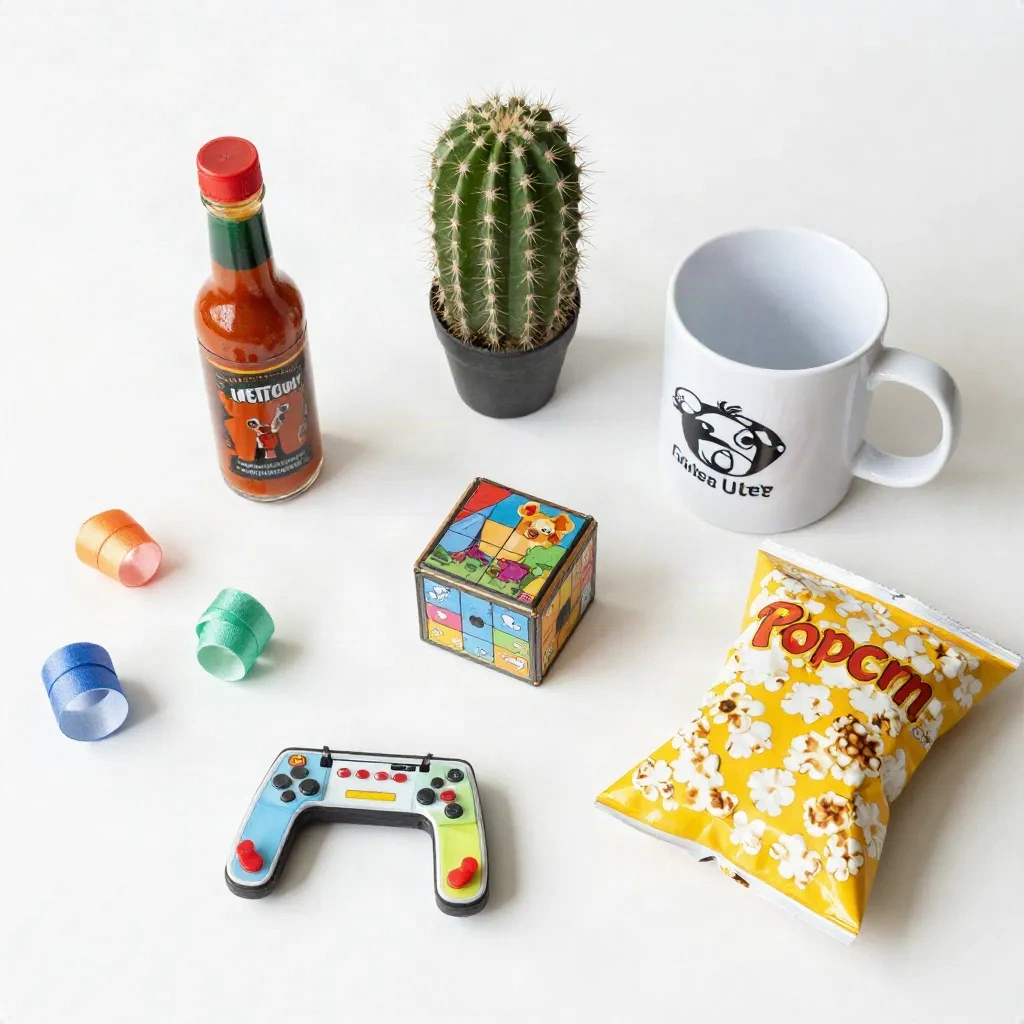
Hot sauce sampler set ($18-24). Three to six bottles, varying heat levels, distinct flavor profiles. Anyone who cooks gets it immediately. Anyone who doesn't cook still tries it once. High steal rate because it's instantly legible and consumable.
Mini cast iron skillet ($20-28). Lodge's 5-inch version. Looks like a cooking prop, performs like the real thing. The person who takes it will use it. One of the few gifts that improves with use in a way the recipient can track.
Wireless charging pad ($15-25). Not exciting. Gets stolen every time because half the room needs one and keeps forgetting to buy it. Universal utility wins at this price point.
Illustrated cocktail recipe book ($20-28). Specific enough to feel chosen, practical enough to go home with someone who will actually open it. Avoid anything that requires a specialty ingredient list on page two.
Seed-starting indoor herb kit ($18-25). Small, self-contained, no commitment required upfront. Appeals to the "I keep meaning to grow herbs" demographic, which is statistically larger than it appears in any given room.
Insulated tumbler, single cup, muted color ($20-28). No visible exterior branding. People already have three of these and still want a fourth. The category won because the product genuinely works.
Novelty puzzle, 500 pieces, art print ($20-26). Not a thousand-piece weekend project. Completable in an afternoon. A puzzle that photographs well gets done more often than one that doesn't.
Mini projector ($28-35, slightly over budget but often on sale). Small enough to wrap convincingly, useful enough that the person who takes it actually sets it up that week. Reliable steal magnet.
A local specialty food item you actually sourced ($15-25). This one doesn't scale into a listicle, which is exactly why it works. Something from a bakery, a regional producer, or a spice shop with a real story. The provenance is part of the gift.
A subscription to something they'd never sign up for alone. More on this category below.
Digital subscriptions: the category every guide ignores
Here's what the major listicle sites consistently miss: digital subscriptions make excellent white elephant gifts. They're universally useful, carry no shipping risk, are impossible to accidentally duplicate, and often feel more considered than their price suggests.
The standard objection is "it's impersonal." This confuses impersonal with low-effort. A $20 gift card to a streaming service someone already subscribes to is impersonal. A three-month subscription to an AI language learning app is a decision. It says: I think you'd be curious about this. That's a different register.
The AI-powered learning category in particular has gotten genuinely interesting at the $15-30 price point. Tools that help with conversational language practice, creative writing, image generation, or personal productivity now offer gift options that feel substantive rather than generic. A short subscription to a conversational AI tutor is the kind of thing people say they want to start ("I keep meaning to practice my Spanish") but never quite get around to without external friction. Handing someone three months removes that friction.
Worth noting for the exchange context: digital gifts often get stolen precisely because they're lightweight. No one has to carry them home. The exchange dynamics reward this.
When funny is the right call (and when it isn't)
Funny gifts work under two conditions: when the group knows each other well, or when the humor is so broadly legible it requires no shared frame of reference.
The bidet attachment ($35-50, slightly over the standard budget) is a funny gift that works in both conditions. The humor is self-contained, the product is functional, and it lands regardless of familiarity. It has been cited in white elephant guides since roughly 2019 and still gets taken because the second layer, genuine utility, survives the initial laugh.
The toilet bowl mug is a funny gift that works only in the first condition. In a room of near-strangers, it reads as "I didn't try."
A useful rule: the gift should be funny on its own, not because of what it implies about the recipient. Anything that requires the person to perform their own reaction, to play along with a joke they didn't set up, is a burden, not a gift. The room watches the unwrapping. That moment needs to pay off for everyone, not just the people who know the back story.
The best funny gifts have a second layer that emerges on second look. Absurd at first glance, functional on closer inspection. That combination is rarer than it seems.

Three categories that look good and consistently don't
Candles. Every white elephant guide includes them. They get taken once, rarely twice. The problem: scent is personal, and a candle that doesn't match someone's home doesn't get lit. The category fails the steal threshold because it requires too much coincidence between the giver's taste and the room's. Skip them unless it's from a brand whose name you know before being told.
Wine accessories at the standard budget. Openers, aerators, bottle stoppers, well-intentioned and nearly invisible. The person who takes them already has two of whatever it is. The person who doesn't open wine that way has no use for them at all. The exception is a high-end sommelier's corkscrew at the $40-60 range, which is a genuinely coveted tool. At $25, this category doesn't deliver.
Novelty socks. They became a default gift around 2014 and never left. The problem is that they're safe, and safe gifts don't get stolen. They get thanked politely and drawer-filed. If you're going the wearable route, go further: a single pair of genuinely good merino wool socks from a brand people recognize is more stealable than six pairs of avocado-print cotton.
Read the room before you wrap
The variable that changes everything is whether the exchange is professional or social.
Work exchanges, office parties and team events, favor the universally useful and the slightly impersonal. The steal dynamics are quieter because no one wants to look aggressive in front of their manager. Aim for things that are clearly high quality, immediately understood, and require no explanation. Humor works only if it's self-deprecating or topically neutral.
Social exchanges among friends allow for specificity, humor, and a higher floor of weirdness. The group absorbs in-jokes better. The steal dynamics are louder and more theatrical. You can go further in either direction, more specific or more absurd, and it lands.
No gift performs equally well in both contexts. Calibrate before you wrap.
One thing that applies everywhere: the budget cap is a social contract. Going 40% over it, even with a genuinely better gift, skews the dynamics and makes the person who received it feel obligated in a way they shouldn't at a party. Stay close to the ceiling, not past it. The goal is a gift that someone wants, not one that embarrasses the room.