The Best Demon Names Across Myth, RPG, and Fiction
Summary
The demon names that survive longest share two traits: they come from a specific cultural tradition rather than generic dark fantasy, and they work phonetically when spoken aloud. The strongest picks are Asmodeus, Lilith, Pazuzu, Belial, and Oni. For RPG and fiction writers, medieval grimoire names like Malphas and Focalor add built-in lore. A name generator helps explore traditions beyond the standard list.
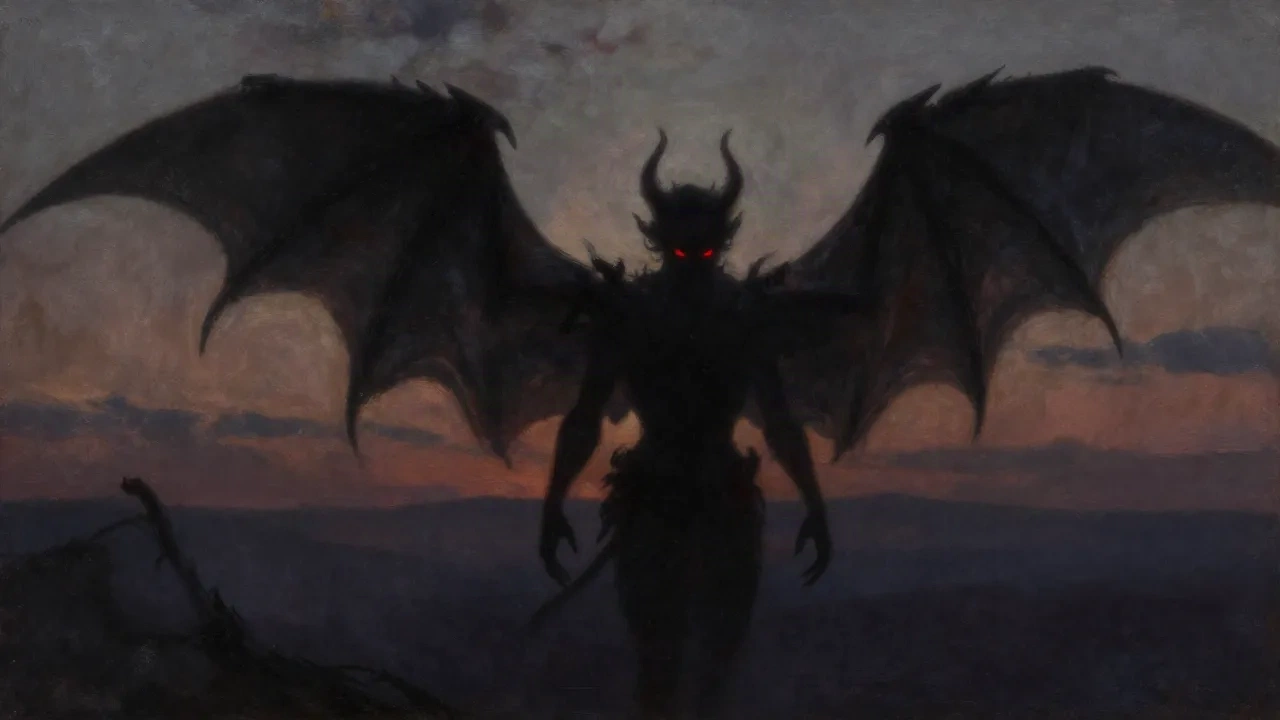
Asmodeus, Lilith, Baalzebub. Three names that have survived over 2,000 years across religious texts, folk tales, and game manuals. If you need demon names for a character, a campaign, or a story, the ones that hold up longest are borrowed from real mythology. The strongest picks by tradition: Asmodeus, Lilith, Pazuzu, Malphas, Ahriman, Samael, Oni, and Belial. Here is where each comes from, and why it still works.
The name that started everything: Pazuzu and ancient Mesopotamia
The oldest surviving demon names come from Mesopotamia, roughly 3,000 years ago. Pazuzu was a wind demon in Assyrian and Babylonian tradition. He had a lion's head, an eagle's body, a scorpion's tail, and four wings. He was not simply evil. He was called upon to drive away the demoness Lamashtu, who attacked newborns. A demon invoked against another demon.
That ambiguity is what makes these names useful for writers. They carry built-in contradiction. A character who is a Pazuzu-type being can be genuinely terrifying and conditionally protective at the same time.
Key Mesopotamian and Sumerian demon names with their domains:
Pazuzu (Assyrian/Babylonian): king of wind demons, drives away Lamashtu
Lamashtu (Sumerian): she who erases, attacks newborns and mothers
Asag (Sumerian): disease demon, dwells in mountains with his stone warrior followers
Asakku (Akkadian): collective name for fever-carrying demons
Gallu (Sumerian): underworld enforcers of the goddess Ereshkigal
The Gallu are particularly useful for RPG settings. They are not named individuals but a rank, like officers of the underworld with a specific function: escorting the dead. That built-in hierarchy gives dungeon masters a ready-made tier system without any invention required.
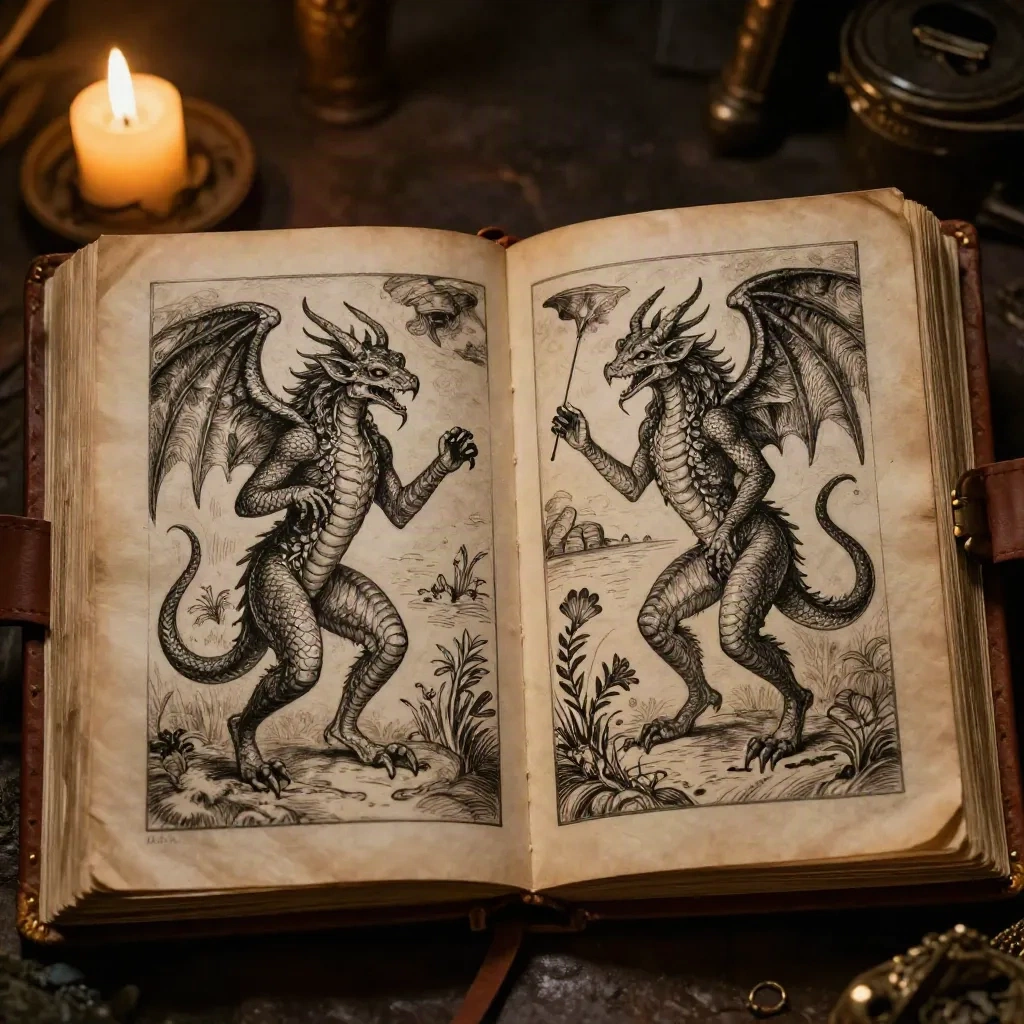
Judeo-Christian tradition built the modern demon vocabulary
The Book of Tobit, the Book of Enoch, and the Talmud contributed more demon names to Western culture than almost any other source. Asmodeus appears in the Book of Tobit, described as a demon of lust who killed seven husbands on their wedding nights before being defeated with the smell of burning fish liver. That specific, almost absurd detail has given him staying power for 2,400 years.
Belial appears more than 100 times in the Dead Sea Scrolls as an opposing force to God. His name means "worthlessness" in Hebrew, but the sound is what survives: two hard syllables, easy to pronounce in any language, harsh on the ear without being unpronounceable.
Lilith's origin is older than the Bible. The Babylonian term "lilitu" referred to female storm spirits. By the time medieval Jewish texts absorbed her, she had become a night demon associated with dreams, wilderness, and resistance to hierarchy. The root "liyl" means night in Hebrew.
Key names from Judeo-Christian and Islamic traditions:
Asmodeus (Persian/Hebrew): demon of lust and wrath, appears in the Book of Tobit
Belial (Hebrew): "worthlessness," lord of chaos and perversion
Samael (Jewish Talmud): poison of God, Angel of Death, distinct from Satan
Lilith (Babylonian/Hebrew): storm demon, night wanderer, child-harmer in older texts
Baalzebub (Canaanite/Hebrew): lord of the flies, corrupted from Baal meaning "Lord"
Azazel (Book of Enoch): fallen angel who taught metalworking to humans, later associated with scapegoat ritual
Zoroastrian and Hindu names: a different architecture
Persian and Hindu traditions built demonic hierarchies with different logic. In Zoroastrianism, Ahriman is not one demon among many but the supreme principle of darkness, opposed to Ahura Mazda. That clean dualism, one force of light against one force of darkness, maps directly onto how most fantasy RPG cosmologies are structured. Pathfinder's alignment grid, D&D's Great Wheel, and Warhammer's Chaos all owe a structural debt to this tradition.
Hindu tradition offers the Asura category: beings who were once divine but fell into opposition to the Deva (gods). The Asura are not simply evil. They are capable, often brilliant, and driven by ambition rather than cruelty. That makes them far more interesting as RPG antagonists.
Key names from Zoroastrian and Hindu traditions:
Ahriman (Zoroastrian): supreme evil spirit, also called Angra Mainyu, eternal enemy of Ahura Mazda
Ravana (Hindu epic Ramayana): ten-headed demon king of Lanka, abductor of Sita
Vritra (Vedic): dragon of drought, said to have blocked the rivers of the world
Mahishasura (Hindu): buffalo demon defeated by the goddess Durga after a war the gods could not win alone
Bhasmasura (Hindu): demon whose touch turned anything to ash, including himself
The "-asura" suffix itself is usable in invented demon names. It signals demonic status without requiring translation. "Vethrasura," "Kalamasura." The suffix carries the weight of an entire tradition without claiming it literally.
East Asian traditions: demons with specific rules
Japanese, Chinese, and Korean folklore produced demon names with precise behaviors. Oni are not vague evil spirits. They are large, horned, and club-wielding. They are tied to roles: punishing sinners, causing disease, appearing during the spring Setsubun festival. Red Oni, Blue Oni, and Black Oni each signal a different temperament and function. That visual-behavioral code is why Oni translate so well into games. You can show one rather than explain it.
East Asian demon names and their domains:
Oni (Japanese): horned enforcers, associated with punishment and disease
Tengu (Japanese): mountain demons associated with pride, martial arts, and the corruption of monks
Jiangshi (Chinese): hopping undead demon, associated with rigidity and cold energy
Gumiho (Korean): nine-tailed fox demon, specializes in shapeshifting and long-term deception
Rakshasa (Hindu/Buddhist): shape-shifting flesh-eaters with formidable sorcerous ability
The Rakshasa crossed from Hindu tradition into D&D in 1975, appearing in the original Monster Manual. Gary Gygax kept the Sanskrit name intact. That choice, importing the actual name rather than inventing an equivalent, set a precedent for how D&D has always handled world mythology.

What D&D and RPGs did to the demon name canon
Dungeons and Dragons took demon naming seriously from its first edition. Gary Gygax sourced names from Collin de Plancy's Dictionnaire Infernal (1818), a French encyclopedia of demons compiling medieval grimoire material into one reference volume. That book gave D&D its most usable names: Malphas, Amon, Astaroth, and Focalor.
The key insight from the Dictionnaire Infernal is that each demon has a specific function. Not just "evil," but "commands 40 legions, teaches philosophy and rhetoric, and builds fortresses." That specificity made them useful for tabletop games and still makes them useful for fiction. A villain with a defined portfolio is more believable than a generic embodiment of darkness.
Useful names from the medieval grimoire tradition, via the Lesser Key of Solomon:
Malphas: builds fortresses, knows the intentions of enemies before they act
Astaroth: teaches mathematics and craft, incites laziness in others
Focalor: commands wind and sea, causes shipwrecks
Furfur: causes thunderstorms, incites love between people
Naberius: teaches rhetoric and logic, can restore a person's lost reputation
Writers who want original-sounding demon names with built-in lore should start with the Lesser Key of Solomon (1640) and the Dictionnaire Infernal. Between them, they contain more than 200 named demons, each with a specific portfolio, visual description, and rank in a hierarchy.
The phonetics of a demon name: what the ear registers as wrong
The names that persist across traditions share a phonetic pattern. Hard stops: the K, G, B, and Z sounds in Baalzebub, Azazel, Asag, Gallu. Fricatives and sibilants: the SH and ZH sounds in Shaitan and Jezebeth. Unusual stress placement: AsMOdeus, not ASmodeus. The stress itself sounds off in ways that ordinary words do not.
Research on sound symbolism confirms what storytellers have always intuited. The Kiki/Bouba effect, identified by German psychologist Wolfgang Kohler in 1929, shows that humans across languages reliably associate sharp, plosive sounds with danger, sharpness, and size. Demon names exploit the sharp side of that spectrum deliberately.
What does not work: soft vowel-heavy names, names that sound like household pets, names built from obvious English word roots. A demon called Shadowmere is defeated before it enters the room.
Three structural templates that work consistently:
Hard prefix with fricative suffix: Karith, Belzath, Nagreth
Three syllables with penultimate stress: Asmodeus, Ahriman, Malphas
Old-language suffix transplanted onto new roots: -iel (Hebrew, inverted from angel use), -on (Greek daimon ending), -ur (Akkadian)
Using a name generator to reach traditions beyond the standard list
The limitation of any curated list is scope. Even a thorough one covers Mesopotamian and Hebrew traditions well, handles Hindu and Japanese reasonably, and then runs thin on Yoruba Abiku, Slavic Chort, Norse Draugr, or Polynesian Te Ka. A name generator built around cross-linguistic phonetic patterns can surface names from those traditions without requiring the user to research each one independently.
NameGeneratorPlus generates demon names by tradition, phonetic style, and intended use. You can filter by origin (Mesopotamian, Japanese, Norse), by syllable count, and by character domain. The algorithm draws on more than 56 name categories, which means a Mesopotamian war demon comes back sounding distinct from a Nordic frost spirit.
The best way to use any generator is not to take the first result. Generate 10 to 15 names. Run each through three quick tests: does it sound distinct when spoken aloud, can a second person pronounce it correctly on first reading, and does the written form suggest the character's nature. Names that pass all three are worth keeping. The ones that pass two out of three are raw material.
How to pick the right demon name for your actual project
The question is not which name sounds most impressive but what the name needs to do in context. A distant villain in a novel can have a complex, three-syllable name that readers encounter rarely and can look up if they forget. A demon who appears in every session of a campaign needs a name that players can say at the table, spell in their notes, and remember three weeks later.
That test is the one most lists skip. Pazuzu is strong on paper. In practice, at a D&D table, players will call him Paz, misplace the stress, or forget the name entirely by session three. Belial, Asag, and Lilith survive the table test because they are short and the stress pattern is unambiguous.
A few principles worth keeping:
Two syllables for recurring characters: Lilith, Belial, Samael, Asag
Three syllables for boss-level figures who appear rarely: Asmodeus, Ahriman, Malphas
Category names (Gallu, Oni, Rakshasa) for groups rather than named individuals
Invented names using known suffixes for original settings where existing names feel borrowed
The name does something specific. Figuring out what it needs to do first makes the choice easier.